
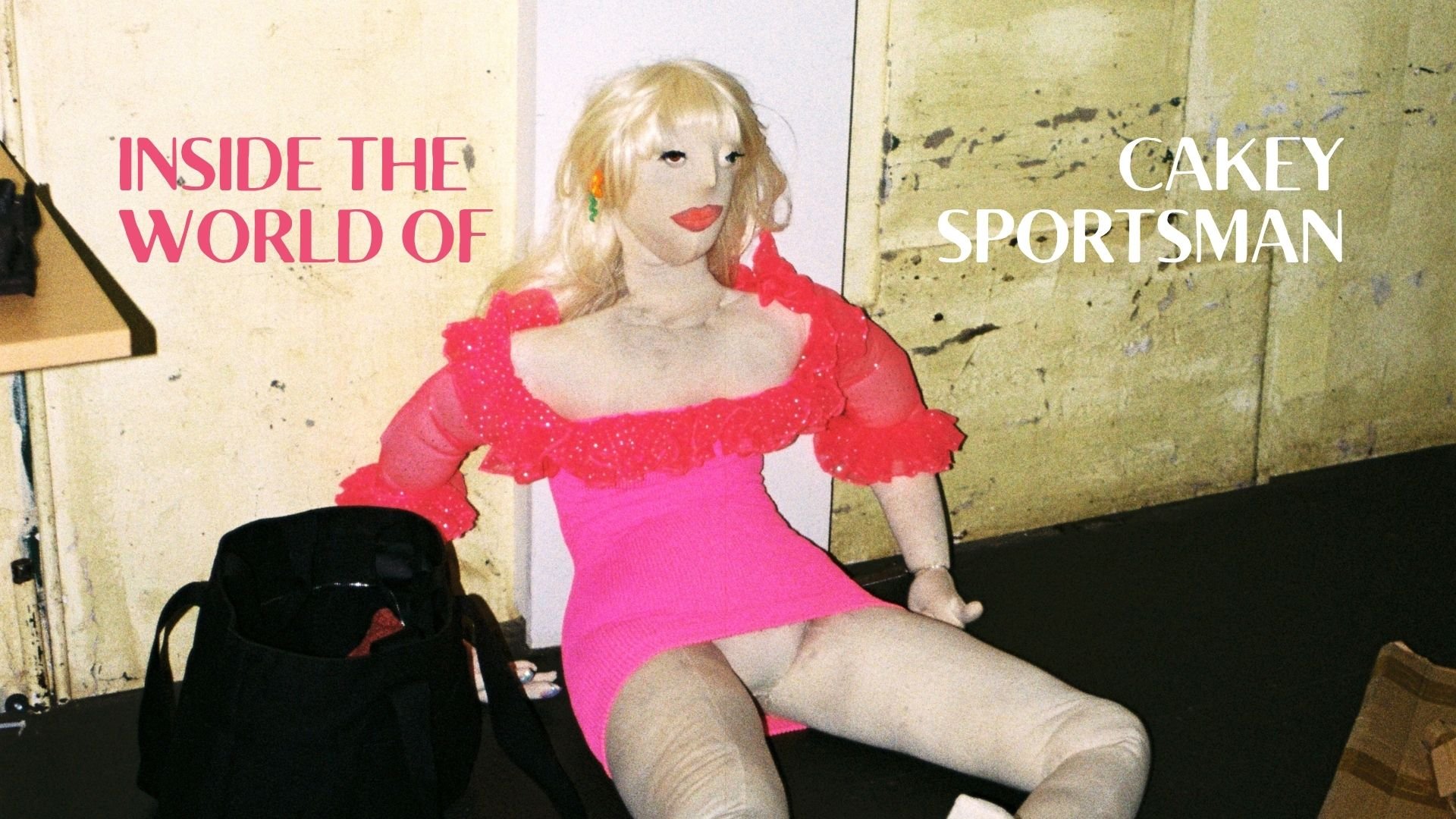
Through the non-linear pursuit of untethered creative expression, Matea Gluscevic aims to integrate our most playful and authentic selves into her designs for her second brand, Cakey Sportsman. At her core, she values being silly, things that make you smile, dance and expressive movement of the body. To her, the playful self is the self that is uninhibited, without judgment and seeking joy and pleasure.
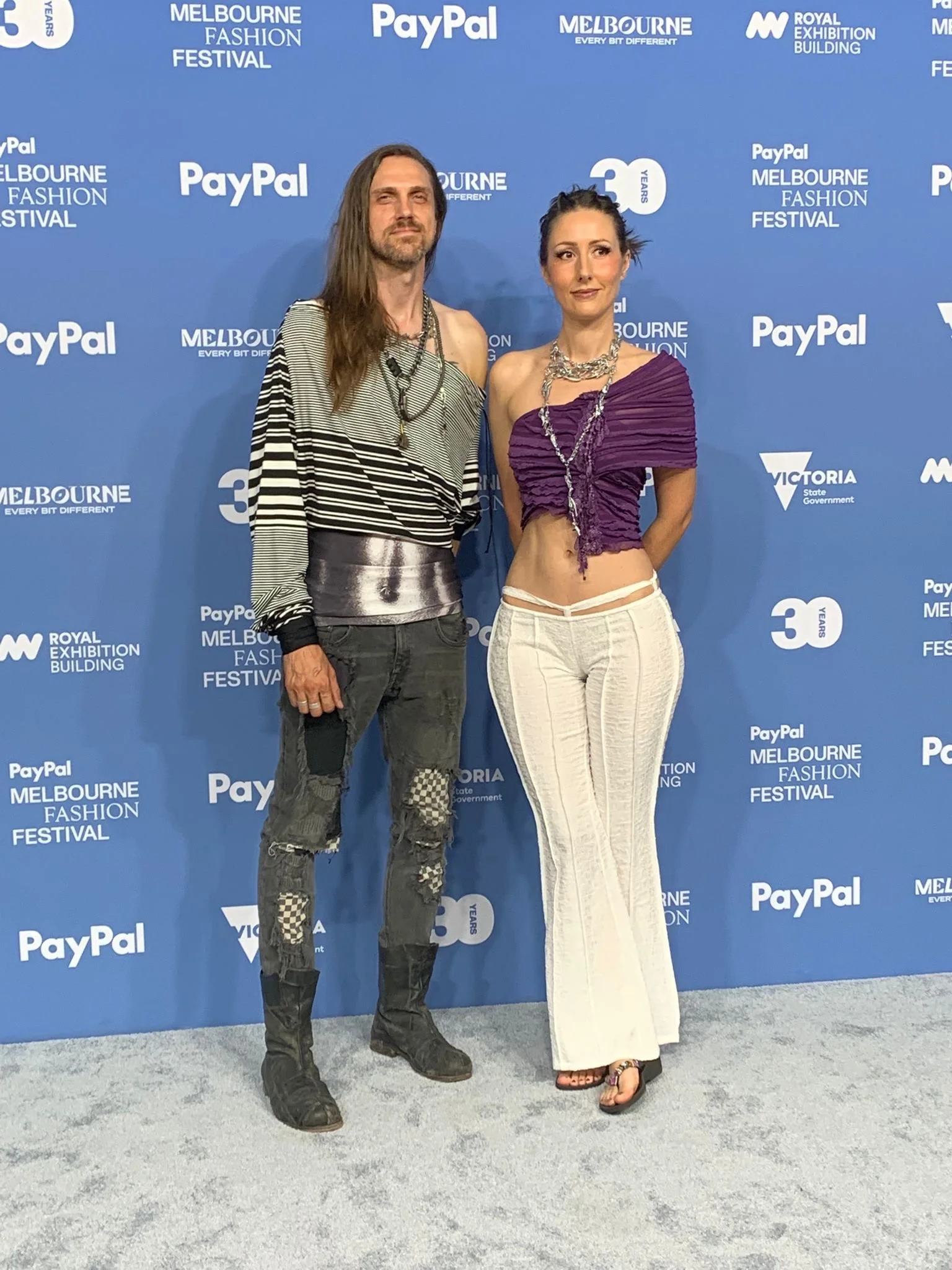
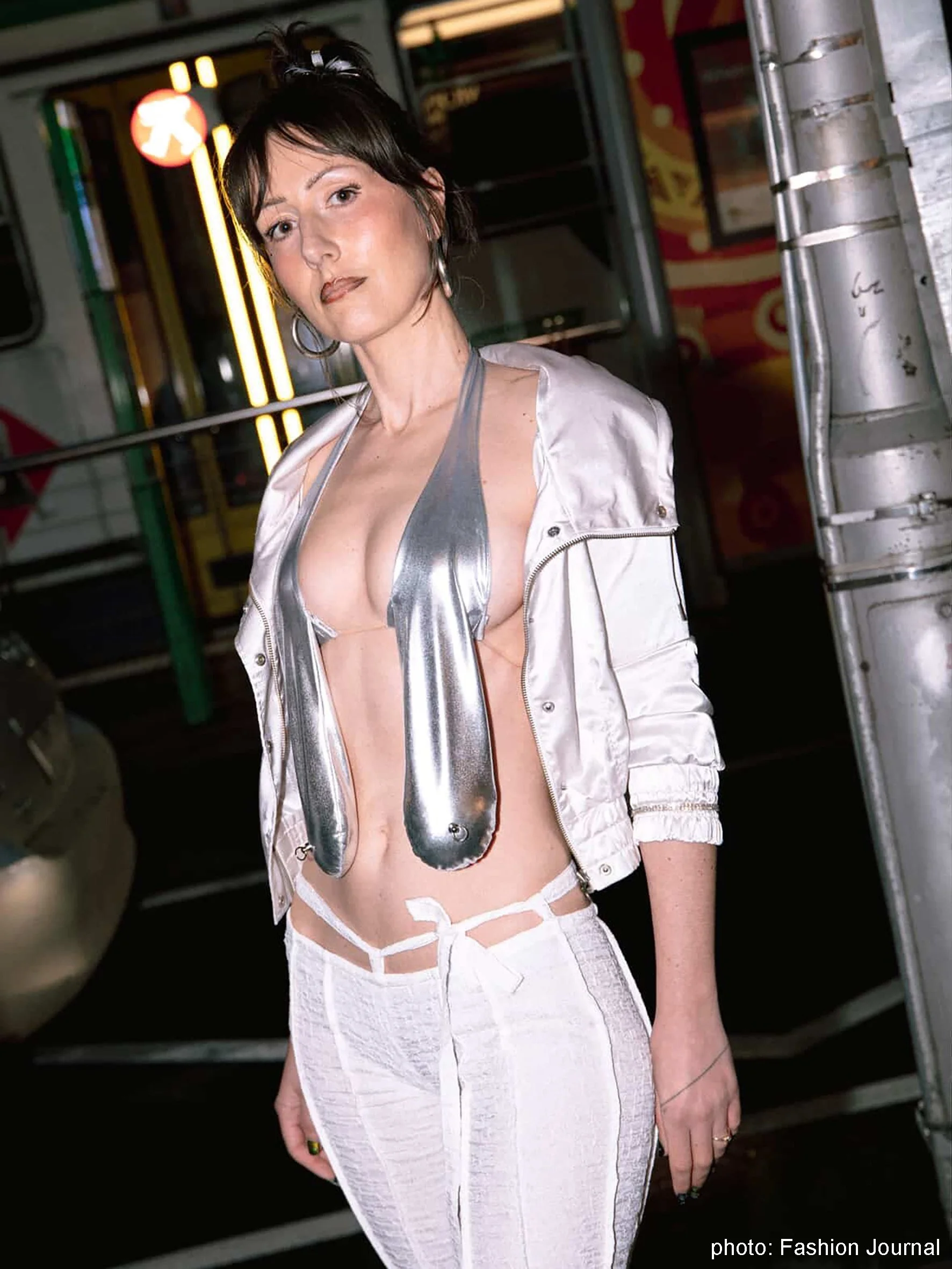
With her roots in South Australia, Matea started her design career in handcrafted footwear, soon building a name for herself among other creatives in Australia. Her footwear designs were featured in fashion festivals across the country, though she reveals she was never particularly drawn to shoes and stumbled upon her talents by chance, in a sideways kinda way.
After finishing high school, her ambitions were set for Adelaide TAFE to study fashion. This brought limiting factors that involved a portfolio of sketches. Drawing did not come naturally to her, and she had nothing physical to prove herself. She decided to study Product Design instead, taking a year off and travelling to Japan to confirm her eagerness to be physically making something.
"At the time it was a toss-up between the footwear and furniture course, but I decided on footwear because I preferred the smaller scale of the object."
Matea's early work spans sculpture, jewellery, queer club nights and running artist-run spaces. These experiences built the foundations of what feeds Cakey Sportsman today. The club nights she ran in Adelaide were no theme dress-up nights, built around being a judgement-free space to let loose and have fun. That ethos has fed into the Cakey Sportsman brand.
★
★
★ ★
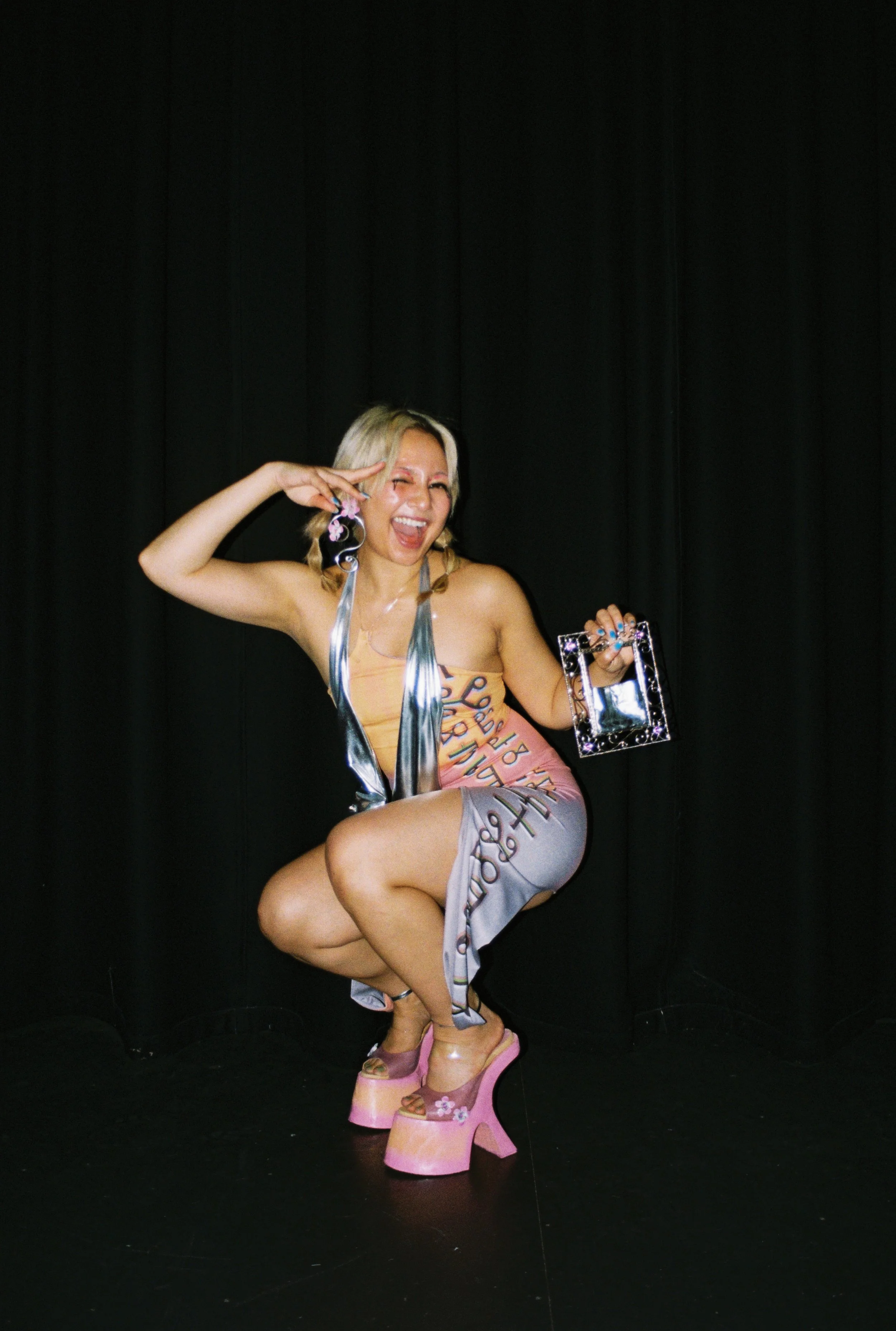
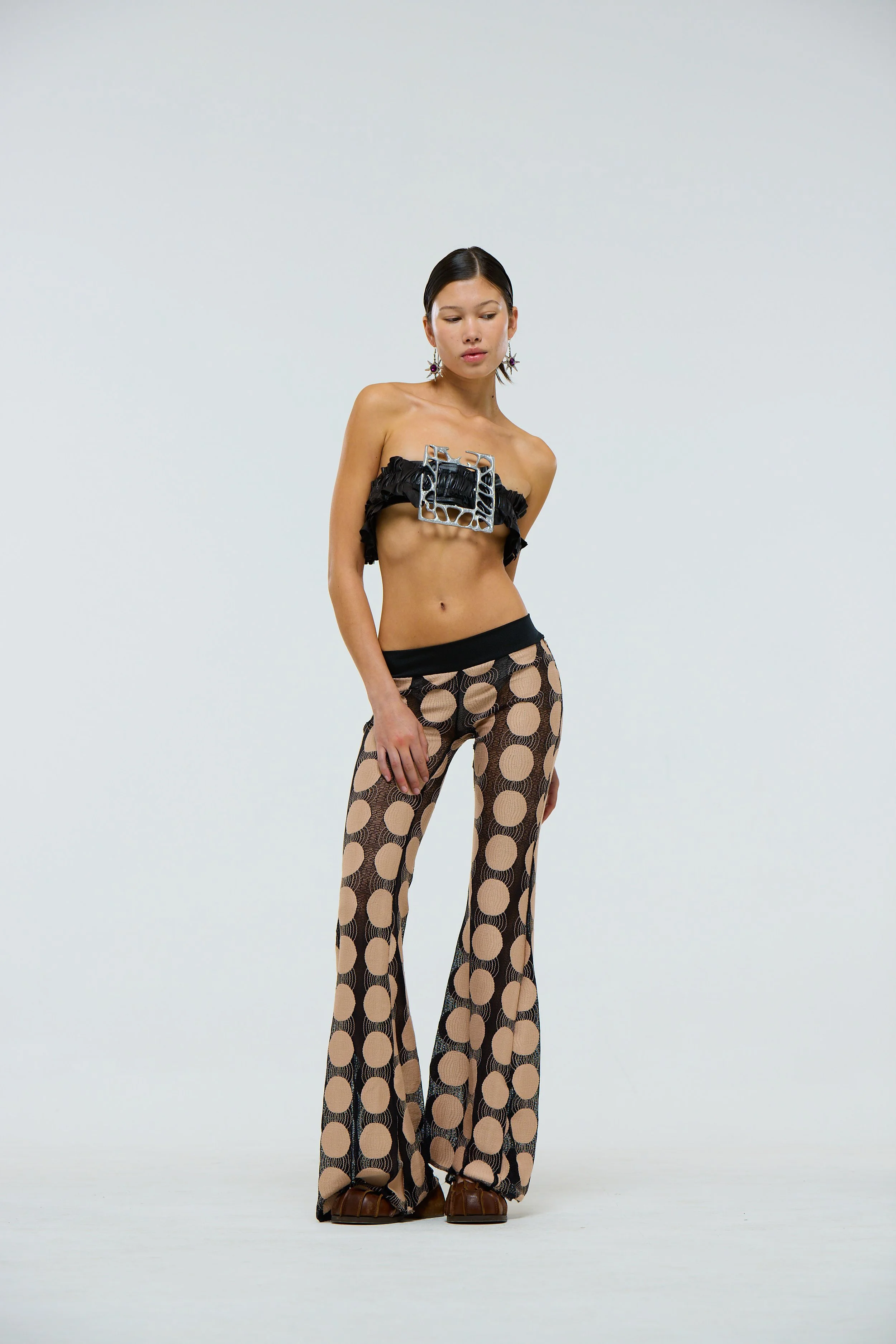
The various storefronts and art collectives she ran and was a part of also informed how she perceives the creative world, giving the brand a much more artistic angle than it would have otherwise. Her performance work, namely a bodybuilding competition she competed in as a joke, gave rise to the Cakey Sportsman abs top.
Aside from a short course in 2009, Matea has no formal fashion training. Designing outside the traditional system, with nothing else to compare it to, spotlighted its own kind of freedom. When she made her first RTW collection, inclusive sizing was something she wanted to prioritise.
Image: Kat Stevens"I automatically made my first RTW collection be XS-XXL, because that would cater to the majority of people I knew, and honestly, I didn't give it much thought at all. It was only after speaking to a few people that I realised this wasn't the norm and that many brands only went up to a 14 or 16."
She chooses not to work from blocks, as she never learnt how to make them or work with them. She didn't learn to grade. She's been drafting every pattern and size from scratch, and her pattern-making methods are one of the only things she held onto from that short course in 2009. When designing RTW, it is usually based on what she wants to wear. Her runway work is more crafted, drawing on the skills she's learnt from shoemaking and visual art.
"When I'm pattern-making and sewing there's more self-taught aspects, a lot more manual calculating and what I call 'common sense engineering', and maybe not using things exactly as they're intended to be used, but I make it work."
Starting her career in South Australia then moving it all to Melbourne had a major impact on her practice. Just before the move, she had been making leather native flower jewellery and selling them at markets because that would actually sell, while trying to push her footwear, which wasn't really working at all. She felt there wasn't any significant interest in her creative work beyond her small social group. This led to feelings of discouragement, convincing herself she should focus on what was making money rather than where her creativity was expressed.
"Once I moved [to Melbourne], within three weeks, I was contacted by Melbourne Fashion Festival asking if they could use my shoes on a runway. I was so blown out! It made me pause and wonder that maybe my work isn't totally crap and I was just trying to make it happen in the wrong place."
Whenever she made footwear, she felt it existed in its own world. When people saw the shoes they didn't really get the whole picture of what she was trying to express creatively. After years of this, Matea still felt a strong pull to making clothes. This was the beginning of Cakey Sportsman.
"I felt I simply wouldn't be able to compare to all the other brands and designers out there which stopped me from pursuing it for a long time. Getting into garments and other wearable pieces was partially about being able to physically express more, engage in more world building as well as finally being at a point that I felt confident and backed myself enough to do it."
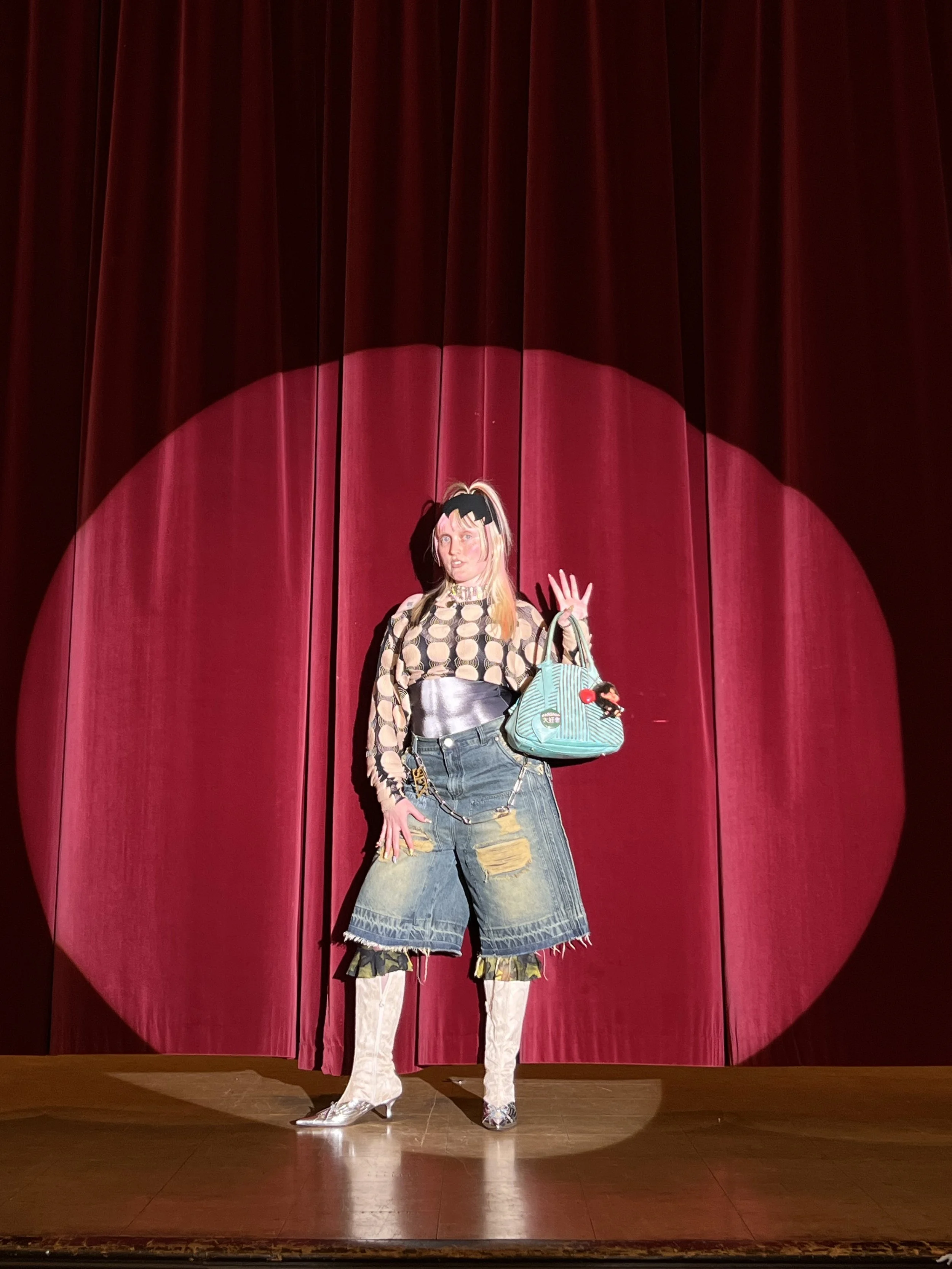
Searching for a fitting brand name began by looking back through various artist names she had already embodied, then finally landing on Cakey Sportsman. She had done so much work as an artist under that name. It had a lot of creative weight. When an idea has existed for a long time, she believes it has more presence, more psychic energy. Cakey Sportsman had been around for a while and she's got depth. Once the name was chosen,
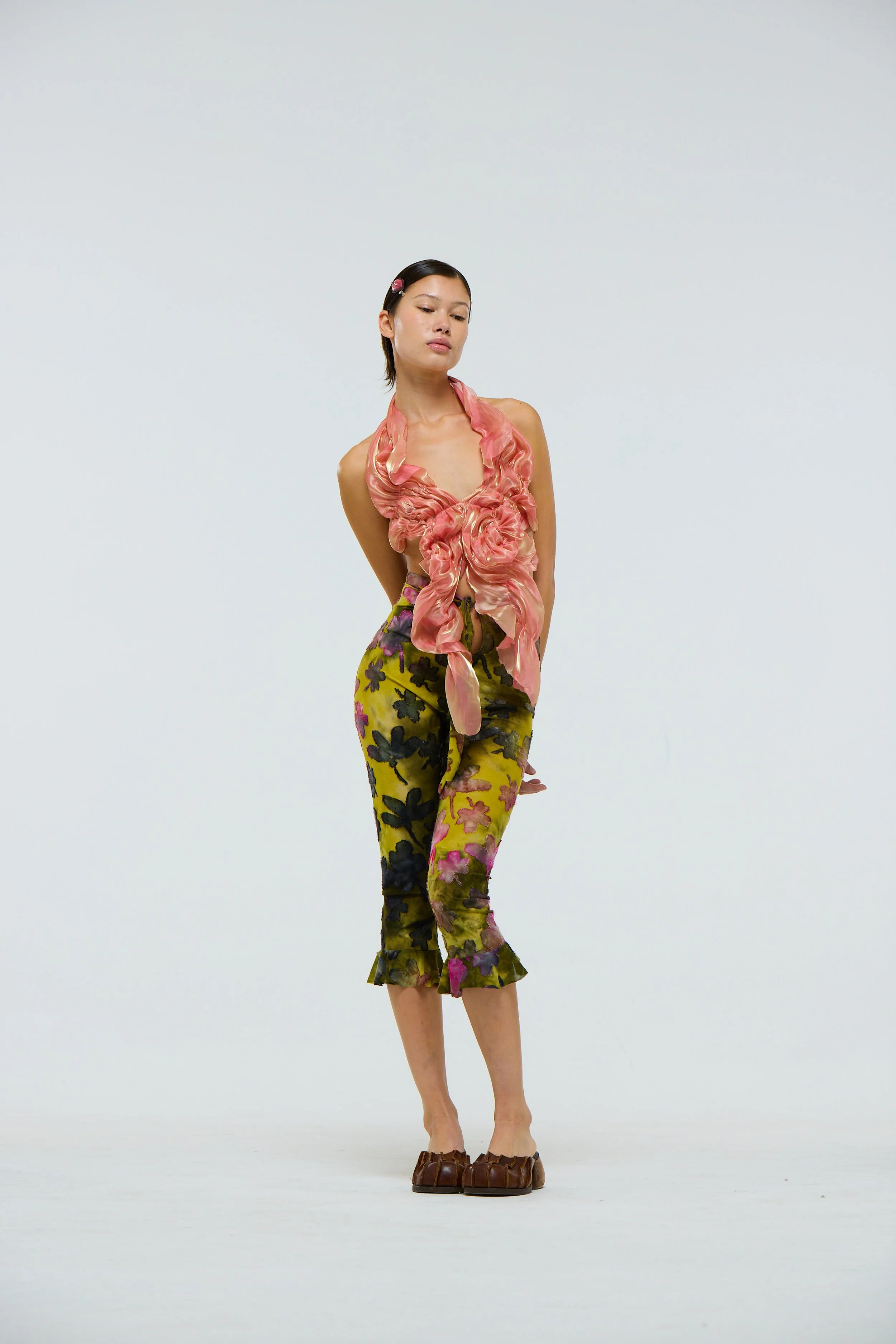
Matea began to realise that there was a lot of the original Cakey Sportsman world that could be incorporated into its fashion angle, for example the bodybuilding abs making their way into a best-selling top. Matea's work for Cakey Sportsman explores the body, identity and self-expression. When designing or creating, she focuses on how the body is interacting with the piece in a direct way. She asks questions like: what part of the body is it accentuating when it's worn? How does this material reflect the qualities of the human body? Or, more conceptually, how does this represent the memory of a physical experience?
"I have always found it hard to 'be on trend' and far more motivated by unique expression and the creation of unique identity. With the brand I do have to try to incorporate some trend-based elements in order to not completely alienate my audience."
Image: Candy BratImages: Mathew Stott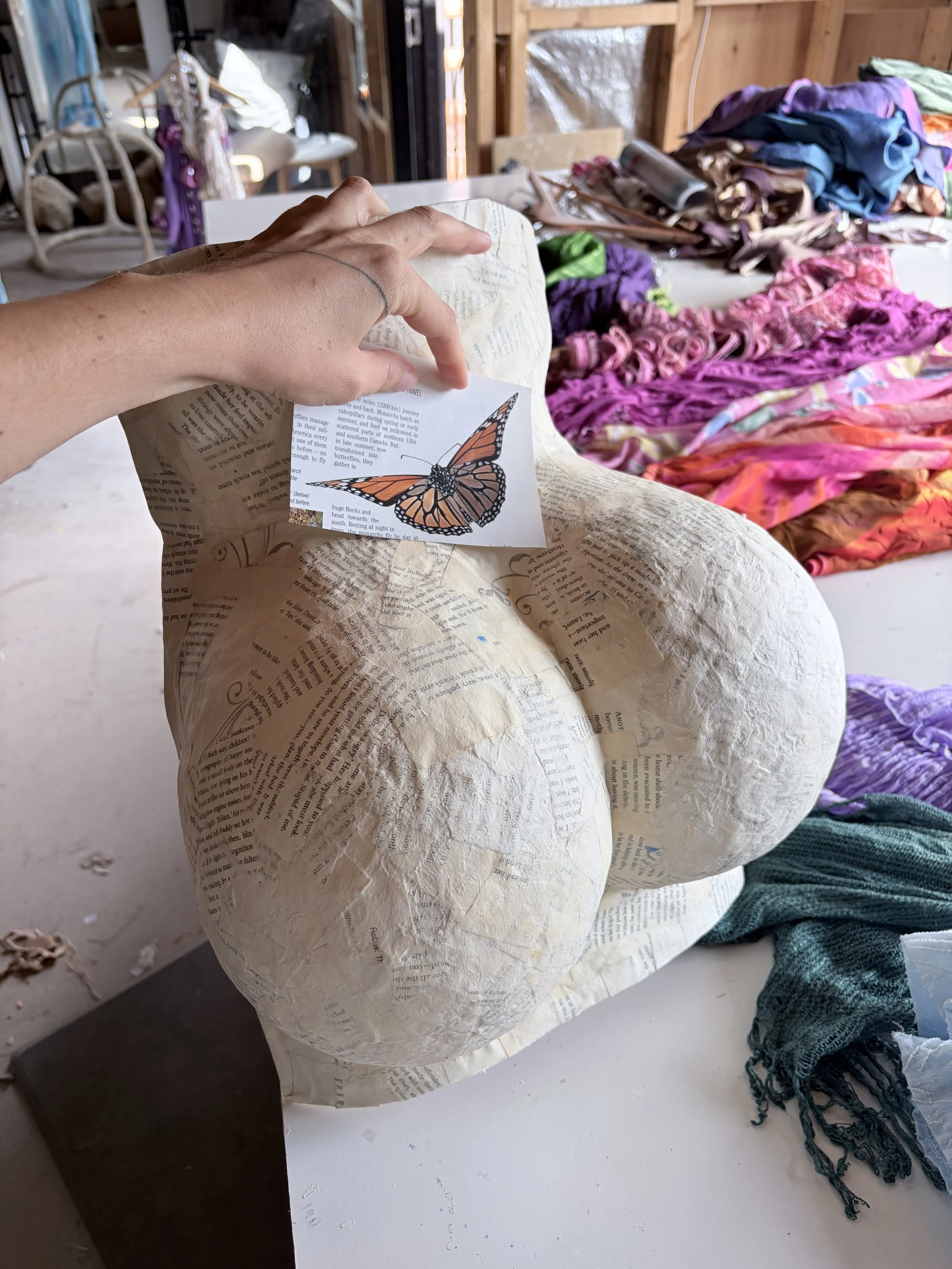
★
★
★ ★
"I spent a lot of my life over-objectifying myself and only seeing my body as a place for others' pleasure, whether that was visually or physically, and to be honest I was pretty depressed for most of my twenties. So, when I finally got to the point of actively thinking about what I enjoyed about my body and existence in my early thirties, I realised it was mostly the fun expressive elements."
Each year starts with a couture runway that's later distilled into ready-to-wear drops. She makes runway collections focusing purely on things she wants to make, and the materials and processes she wants to explore at that given time.
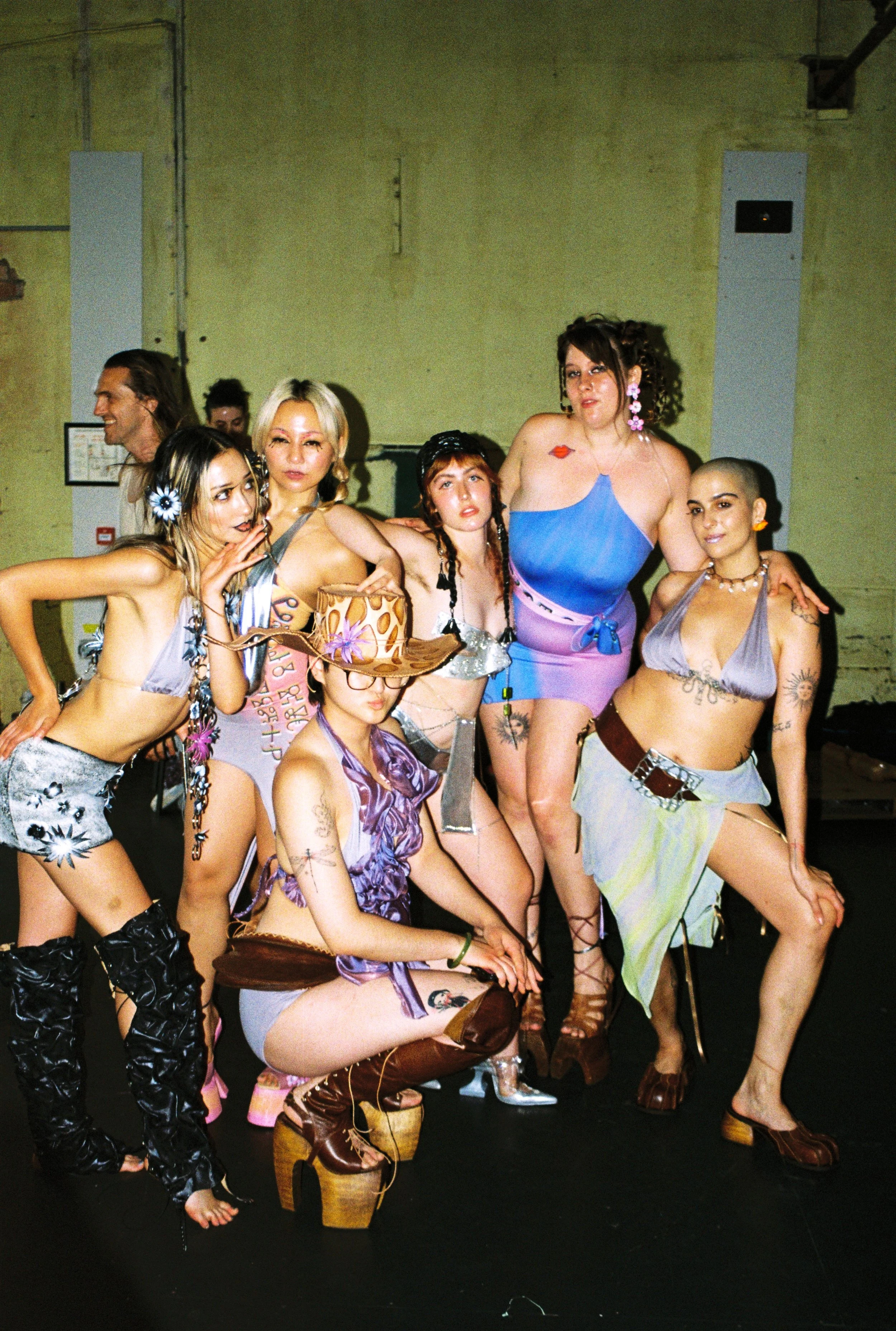
For those new to Matea's work, she feels you should see and experience the Embody Drawstring Top, which she considers the brand's signature piece at this point in time. It also happens to be Cakey's actual abs, the name she used to enter a bodybuilding competition in the late 2010s. She considers it the best piece to experience as a first taste of Cakey.
The humorous side of the Cakey Sportsman world holds immense importance and makes room for her playfulness.
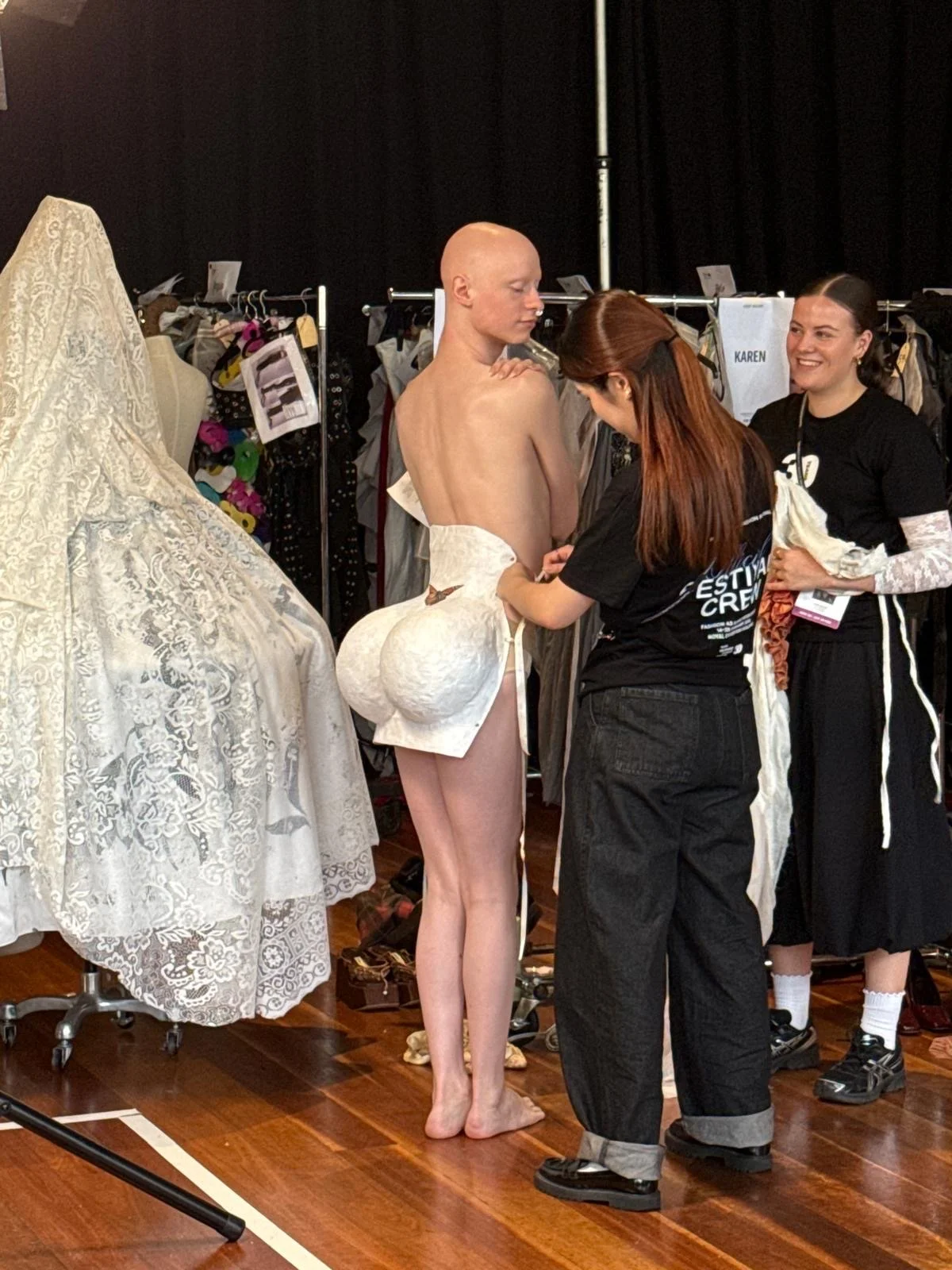
Image: Kat StevensThis year it was papier mache. Navigating the tension between limitless self-expression and the material or technical limitations of making means problem solving, and problem solving is definitely something Matea likes doing.
In the months following a runway, she aims to adapt pieces into something more wearable. From there, she explores what fabrics are available locally, what she's figured out how to make, and lets those limiting factors shape what she will end up making. She wants people to feel special, a little bit fun or silly and hot in her garments
Her upcoming 2026 RTW release could see more wearable pieces using mostly deadstock fabrics and salvaged materials. Through this first year, she has become aware that Cakey Sportsman is its own world, and that she enjoys the world building and storytelling aspect of it. Beyond clothing, Matea sees Cakey Sportsman evolving into a more significant shape that could incorporate sculpture or performance, maybe even fragrance or music.
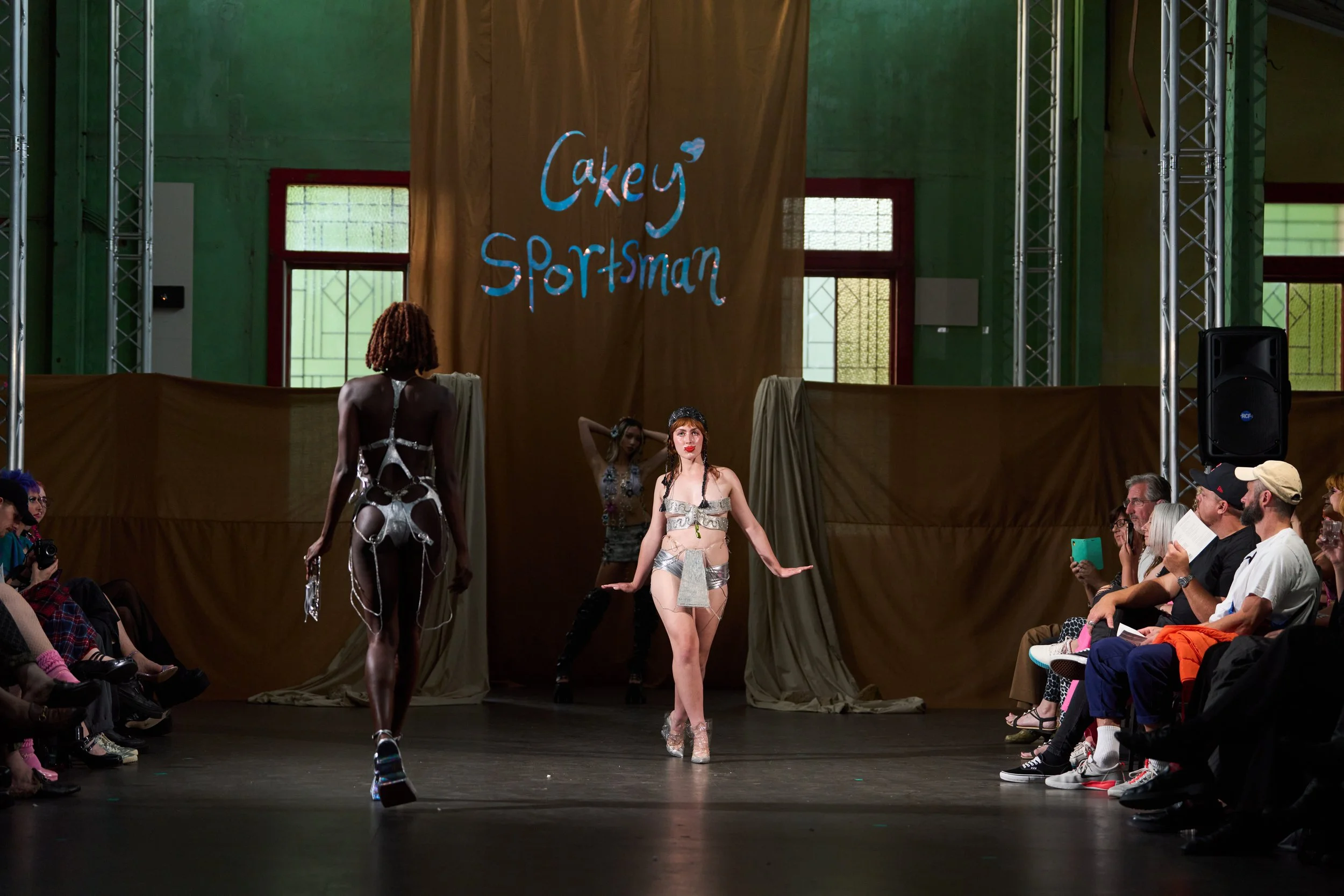
Image: Micaela Chutrau