
Love after-the-fact: Bridie Noonan on her debut play The Boards Above Her Face
Words by Aeva Milos (she/her)
Aeva Milos is a writer, residing on Wurundjeri Woi Wurrung Country. Her work has been published in Going Down Swinging, Gems Zine and Layabout. She is a Voiceworks Online editor. She runs an interdisciplinary and emerging publication collective called Dogstar. Dogstar’s first edition is slated for publication at the end of this year.
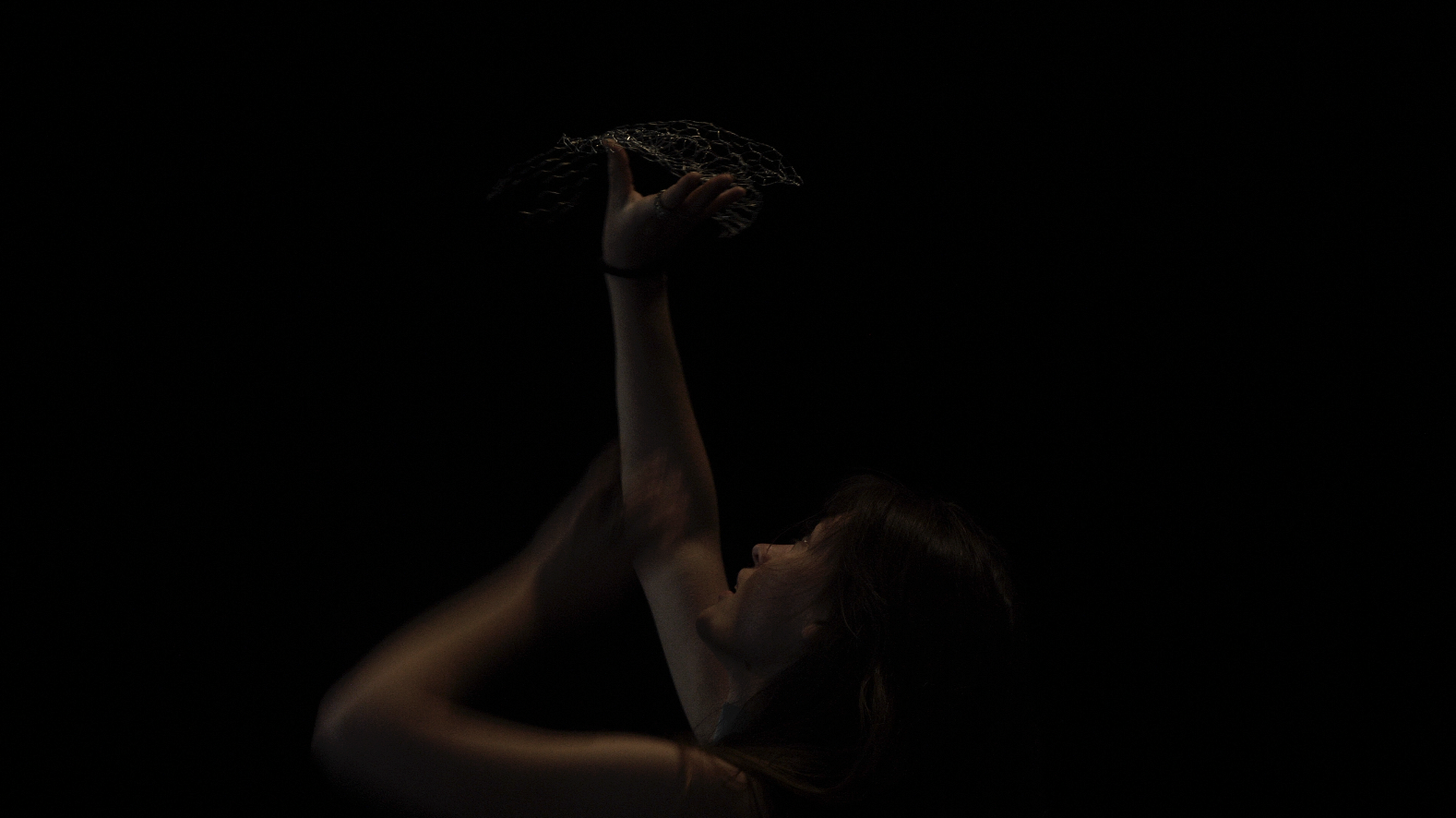
In their one-person play, writer and actor Bridie Noonan seeks to place herself and her audience in the knotty, liminal ruins of the rupture. Over a coffee one morning, Bridie and I talk about their directorial debut and the ambiguous nature of love, magic and loneliness.
Showing at Melbourne Fringe Festival later this month, The Boards Above Her Face is about the peculiar ability of the protagonist, Phoebe, to turn “things into other things”. After turning her lover into a silver bird, Phoebe attempts to reverse the change.
The play emerged from a short story, ‘The Inbetween’, for which Bridie was awarded the 2026 Speculate Prize for Emerging Writers.
Despite the protagonist’s uncanny and magical ability for alteration, the story doesn’t invest itself in the literal act of transformation; rather, Bridie is interested in the aftermath of catharsis, the moment following the boy’s transformation into a silver bird, for it is in the repercussions to the event where the true and gruelling labour of desire, care and self-actualisation begin.
“I think the catharsis is a really important process to experience,” Bridie reasons. “I think it’s necessary to have some kind of violent release.
“But I don’t think that the endpoint of a work is catharsis.”
She continues, “It’s almost like this play takes place after the act of catharsis, and so it’s about what you do with the wreckage.”
Or, as Bridie questions later in our conversation: “How do you reconstitute a world that you have blown apart?”
With sound by Shayaki Niranjan and lighting by Sian Tjia Hennessy, Bridie notes that the experimental nature of the story comes alive through its theatrical treatment, referencing the effect lighting and sound has on wordlessly revealing hidden elements of the play: “In theatre, why it’s so magical, is because the actual story itself could feel like it has come to a close, but then something in the light and sound open it up entirely.”
Phoebe isolates herself while attempting to reverse her lover’s metamorphosis. In her self-imposed seclusion, Phoebe starts an erotic relationship with a chair. While this may lend an absurdity to the play, Bridie, who also stars as Phoebe, is drawn to the illogicality of love and the solitude it engenders, when love and pain become inseparable from one another.
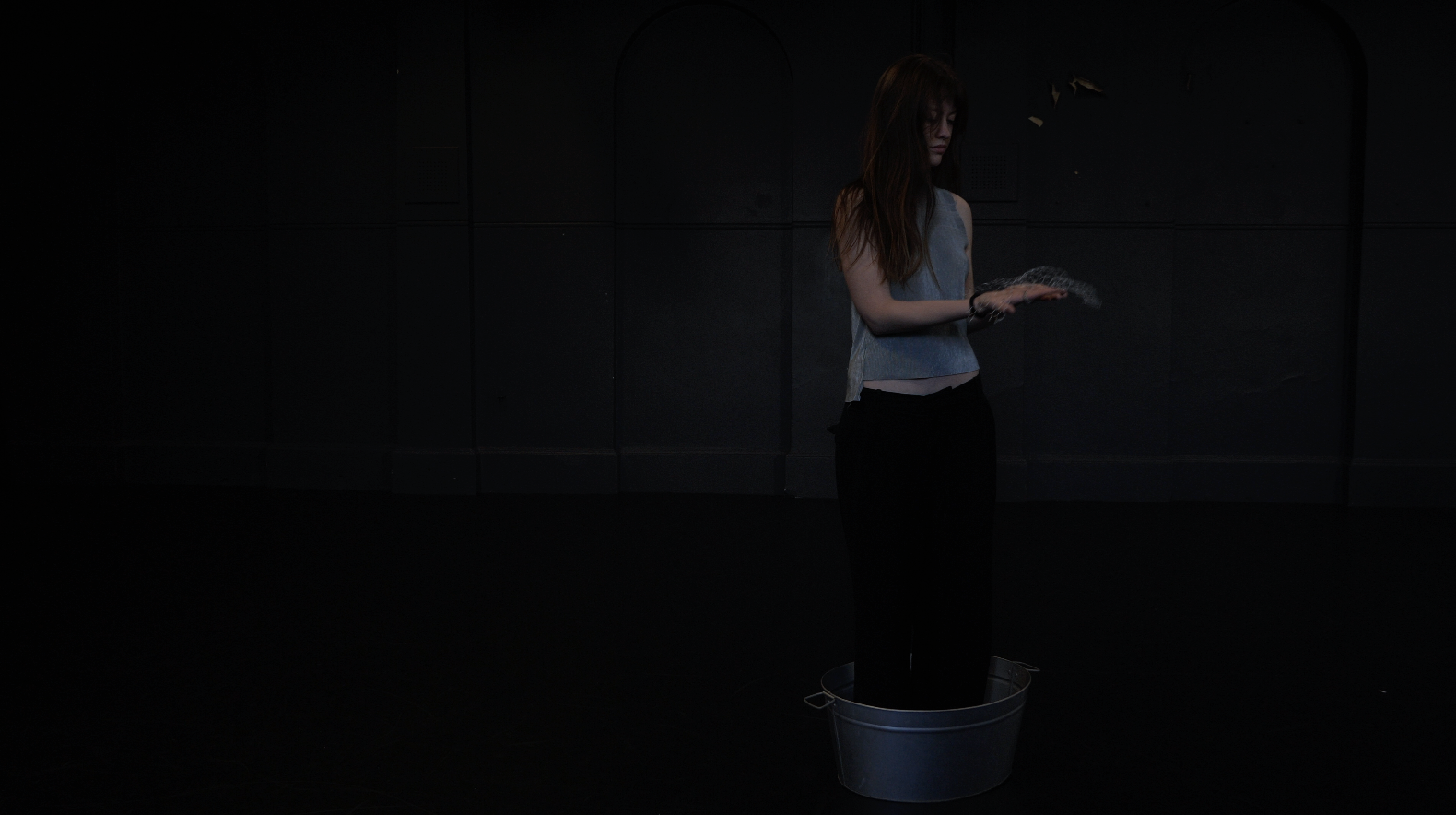
“It’s a lonely play,” Bridie confirms. “It’s very lonely to be a solo performer. I’ve never done it before, and I miss the feeling of having other people on stage.
“There’s also this loneliness you can only access through heartbreak. You can be incredibly close to someone and love them so much and still feel completely abandoned by them or misunderstood by them while you’re together.
“There’s a kind of tension—or a contradiction—in being in love with that.”
And yet, I sense that to only associate The Boards Above Her Face with a despairing pessimism would be doing a disservice to Bridie’s complex treatment of heartbreak. As Bridie says, “There are moments in the story which are just about the nature of being in love that, for me, were really fun and beautiful to write because they’re explosively happy. And the experience of being in love with someone, even if it ends badly or doesn’t work, is still really special and generative.”
Despite her personal interpretation and relation to the play, Bridie edges away from offering anything prescriptive about its overall premise. “I feel like there’s no message to the show,” she contends. While I detect she is just being modest, I understand that what she really means is that the play is full of meaning, but she is not interested in leading you to an answer. It will offer itself up to you, wherever you meet it.
“Audiences are incredibly smart,” she argues. “[As audience] our interpretation and our ability to analyse and feel is not trusted, and so things become incredibly didactic.
“It’s hard when it’s like, what are the themes and why is it important? What does it mean? It’s just a story about suffering in some way. I don’t want to it to be a story about overcoming something.”
Over our conversation, Bridie flits between maybes, enveloping the nebulous in-between inherent to love and self-identity. What I realise is that they are satisfied by the very dissatisfying circumstances of irresolution, and despite the play’s marketable themes of ‘love’ and ‘loneliness’, this—the complicated vacillation of one’s desires and self—is what her play tends towards. After all, haven’t we all felt the awful will to desperately cling onto that which is not ours, and isn’t the failure part of the process too?
The Boards Above Her Face is playing September 29 – October 3 at the Meat Market for Melbourne Fringe Festival.
You can buy tickets here.
Written, directed, and performed by: Bridie Noonan
Produced by: Zarzokimi Moss
Fundraising: Greta Kantor
Sound design and composition by: Shayaki Niranjan
Production design by: Zosia Slifirski Duckett
Lighting design by: Sian Tjia Hennessy
Dramaturgy and Movement Direction by: Lucy Eidelson
Dramaturgy by: Olive Weeks
Photography by: Elliot Elkhoury
Poster design by: Zarzokimi Moss